Rebuilding Your Iron: Gut Health, Food, and Why Oral Iron Is Slow


How to Raise Low Ferritin and Understand Why Your Iron Supplements May Not Be Working
You finally have an answer.
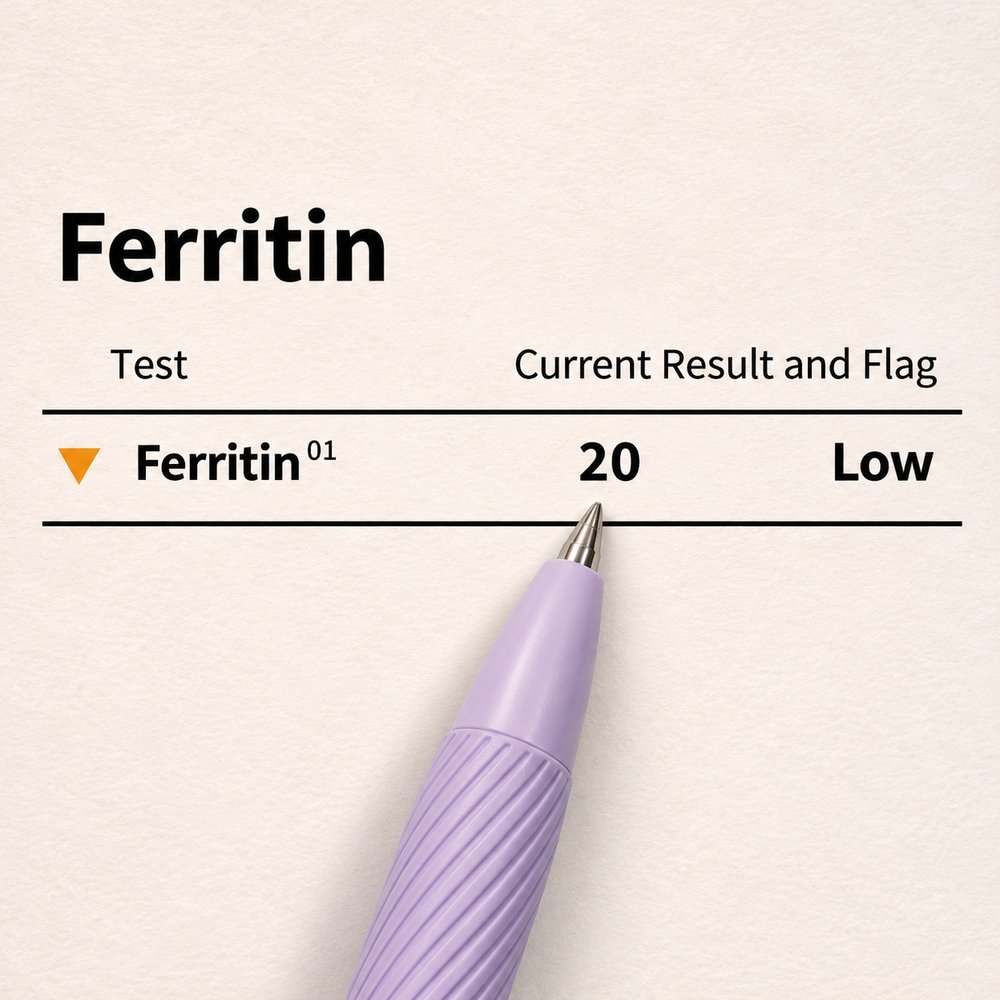
Your ferritin is low.
Maybe you've been struggling with fatigue, hair shedding, brain fog, or restless legs for months. Maybe you were surprised to learn that your iron stores were depleted even though your hemoglobin looked normal.
And now you're asking the most natural question:
“Okay, so how do I fix it?”
You might assume the answer is simple. Buy an iron supplement, take it every day, and wait to feel better.
But rebuilding iron stores isn't always that straightforward.
In fact, one of the most common frustrations we hear is:
“I've been taking iron. Why is my ferritin still low?”
There are several possible explanations.
Sometimes the problem is how much iron you're getting.
Sometimes it's how well your body absorbs it.
And sometimes you're losing iron faster than you can replace it.
That's why we approach low ferritin as something to understand and treat thoughtfully, not simply a number to raise.
In the first article of this series, we explained why ferritin matters and why low iron stores can be missed during perimenopause and menopause.
Now let's talk about how we help patients rebuild those stores and why the process often takes longer than they expect.
First, Why Is Your Ferritin Low?
Before we talk about supplements or food, there's an important question:
Where did your iron go?
Think of your iron stores like a bucket of water.
If the bucket is empty, naturally you want to refill it.
But what if there's a hole in the bottom?
You can keep pouring water into it, and it may never stay full.
That's why finding the cause of iron deficiency comes first.
Are You Losing Iron Through Heavy Periods?
For women in perimenopause, heavy or irregular menstrual bleeding is an important possibility.
You might have periods that last longer than they used to.
You might experience especially heavy flow during certain cycles.
Or you may have months when your bleeding is unpredictable.
Every episode of blood loss can affect your iron stores.
And if the bleeding continues, replacing iron can become an ongoing challenge.
We need to address the reason for the loss while also discussing how to restore your iron levels.
Are You Absorbing Enough of the Iron You Eat?
Sometimes someone is eating iron-containing foods or taking a supplement, but their iron stores still aren't improving.
That's when we look more closely at absorption.
Your digestive system plays a major role in how your body takes in iron.
Certain stomach and intestinal conditions, as well as some medications, can interfere with that process.
Are You Eating Enough Iron?
Reduced appetite, smaller meals, dietary changes, and weight-management treatment may also affect iron intake.
For example, a woman using a GLP-1 medication may simply be eating less overall.
Or someone who has shifted toward a plant-forward diet may be getting a type of iron that's less readily absorbed.
These factors don't automatically mean a person is iron deficient.
But they can help explain why her iron stores aren't being replenished.
What If You're Already Postmenopausal?
We want to emphasize this because it's important.
If you've stopped having menstrual periods and your iron levels are low, we need to investigate why.
Gastrointestinal blood loss is one possible explanation.
Depending on your medical history and test results, a gastrointestinal evaluation may be appropriate.
We never want to cover up an unexplained deficiency simply by taking iron indefinitely.
How Does Gut Health Affect Iron Absorption?
Let's talk about something that surprises a lot of patients.
You can eat iron-rich foods and still have trouble absorbing enough iron.
That's because iron has to move through your digestive system before your body can use it.
And several factors influence how effectively that happens.
Stomach Acid and Iron Absorption
Stomach acid helps your body absorb iron.
If you regularly use medication to reduce stomach acid, that may be relevant when we evaluate low ferritin.
It doesn't mean you should stop your medication.
It means we want to understand why you're taking it, whether it's still necessary, and whether it may be contributing to absorption difficulties.
Those decisions should be made with your prescribing clinician.
H. Pylori and Low Iron
H. pylori is a stomach infection that can be associated with iron deficiency.
For some patients, identifying and treating this infection is an important part of improving iron stores.
We may consider testing when someone's history or laboratory results suggest it's appropriate.
Celiac Disease and Ferritin
Celiac disease can affect the part of the small intestine involved in iron absorption.
And here's something worth knowing: someone can have celiac disease without obvious digestive symptoms.
So if a patient has unexplained iron deficiency, screening for celiac disease may be part of the conversation.
Gut Inflammation and Hepcidin
Your digestive system isn't the only factor involved in absorbing iron.
Your body also uses a hormone called hepcidin to help regulate how much iron is absorbed and released.
Think of hepcidin as a gatekeeper.
When hepcidin levels are higher, your body absorbs less iron.
Ongoing inflammation can increase hepcidin, making iron replacement more difficult.
We don't need every patient to become an expert in this hormone.
But understanding the basic idea helps explain why taking more iron doesn't always solve the problem.
Sometimes we have to address what's interfering with absorption before we see the progress we're hoping for.
What Foods Help Raise Ferritin?
Food is one part of rebuilding and maintaining healthy iron stores.
But not all iron-rich foods are absorbed equally.
There are two main types of dietary iron to understand.
Heme Iron: Iron From Animal Foods
Heme iron is found in foods such as:
- Red meat
- Poultry
- Fish
- Shellfish
Your body generally absorbs this type of iron more efficiently than the iron found in plants.
For someone who eats animal products, these foods may be part of a personalized plan to improve iron intake.
Non-Heme Iron: Iron From Plant Foods
Plant-based sources of iron include:
- Lentils
- Beans
- Spinach
- Tofu
These foods can absolutely be part of an iron-conscious diet.
But plant iron isn't absorbed as efficiently as heme iron.
That means preparation, food pairing, and meal timing can make a difference.
Does Vitamin C Help You Absorb Iron?
Yes. Vitamin C helps your body absorb non-heme iron.
So if you're eating plant-based sources of iron, combining them with vitamin C-containing foods can be helpful.
Instead of thinking only about which foods contain iron, we encourage patients to think about which foods they're eating together.
Can Coffee and Tea Affect Iron Absorption?
Yes.
Coffee and tea contain compounds that can interfere with iron absorption.
That doesn't mean you need to give up your morning coffee forever.
But if you're working to improve low iron stores, the timing of coffee and tea around iron-rich meals or supplements may matter.
What About Dairy and Calcium?
Calcium can also interfere with iron absorption.
For some patients, separating calcium-containing foods or supplements from oral iron is part of the treatment plan.
Again, this is about thoughtful timing rather than unnecessarily eliminating foods from your diet.
Can You Raise Ferritin Without Eating Meat?
A person can get iron from a plant-forward diet.
But because plant iron is less readily absorbed, it may require more attention to food choices, pairing, and overall intake.
If someone has confirmed iron deficiency, food choices alone may not be enough to replenish depleted stores.
That's something we evaluate individually.
Why Is Oral Iron So Slow to Work?
This is one of the biggest questions we hear.
You've started taking iron.
You're being consistent.
You're expecting your energy to come back.
But then you have your ferritin checked, and it doesn't seem to have moved much.
Why?
Part of the answer involves those iron stores we talked about in the first article.
Remember the savings account analogy?
Your body has immediate iron needs, and it also needs to rebuild the reserves that have been depleted.
That process takes time.
But there's another factor that can make oral iron more complicated:
Hepcidin.
Is Taking More Iron Always Better?
Not necessarily.
When you take oral iron, your body responds by increasing hepcidin.
As we discussed earlier, hepcidin helps regulate iron absorption.
Higher hepcidin levels can reduce how much iron your body absorbs from the next dose.
That effect can last for approximately 24 hours.
So taking iron more frequently doesn't always mean your body absorbs more of it.
In fact, research described in Khyati's original clinical outline found that women with low iron absorbed more when oral iron was taken every other day rather than on consecutive days.
The findings also suggested that splitting iron into multiple doses during the same day did not improve absorption.
That has changed how some clinicians approach oral iron treatment.
Should You Take Iron Every Day or Every Other Day?
For many patients, an every-other-day approach may be appropriate.
But this isn't a recommendation for everyone to change their supplement schedule.
The right form, amount, and timing depend on your laboratory results, symptoms, medical history, and other medications.
Some patients may need a different treatment approach.
We want the iron you're taking to be useful—not simply more frequent.
What's the Best Way to Take an Iron Supplement?
There's no single supplement routine that works for every person.
However, when we develop an oral iron plan, we consider several practical details.
Timing Matters
Iron may be better absorbed when taken away from certain foods and drinks.
For some patients, that means taking it in the morning, on an empty stomach, or with vitamin C.
But tolerance matters, too.
If a supplement causes significant stomach discomfort, we may need to adjust the approach.
Coffee, Tea, Calcium, and Dairy
We discuss separating oral iron from coffee, tea, calcium, and dairy because these can interfere with absorption.
Thyroid Medication
Iron can interfere with thyroid medication absorption.
If you take thyroid medication, the timing of iron is especially important.
Khyati's treatment outline specifies separating iron from thyroid medication by at least four hours.
Your clinician should confirm the appropriate instructions for your particular medication and treatment plan.
Choosing a Form You Can Tolerate
Some people experience constipation, nausea, or other digestive discomfort with oral iron.
When that happens, it's tempting to stop taking it altogether.
Instead, we can discuss whether another form or schedule may be appropriate.
Consistency matters, but so does finding a plan you can actually follow.
And one more reminder:
Please don't choose your own iron dose based on an article or someone else's supplement routine.
Iron should be guided by your own laboratory results and medical evaluation.
How Long Does It Take to Raise Ferritin?
This is where realistic expectations can make a big difference.
Iron stores usually aren't depleted overnight.
And they generally aren't restored overnight, either.
If someone has developed iron-deficiency anemia, hemoglobin may begin responding within a few weeks of effective treatment.
But rebuilding ferritin—your stored iron—often takes longer.
For many patients, meaningful improvement in ferritin may take around three months of consistent treatment.
That timeline depends on the cause of the deficiency, how well iron is absorbed, and whether iron loss is continuing.
When Should Ferritin Be Rechecked?
Khyati's clinical approach typically includes repeating laboratory tests after approximately 8 to 12 weeks of treatment.
That allows us to evaluate whether the plan is working.
We may look at ferritin and other iron studies, along with changes in symptoms.
If the numbers aren't improving as expected, we want to understand why.
It may be an absorption issue.
There may be continued blood loss.
Or the treatment approach may need to be reconsidered.
When Will You Start Feeling Better?
Some patients notice improvements in energy or sleep before their iron stores have fully recovered.
Others take longer.
Hair concerns can be particularly slow to change.
That's another reason we encourage patients not to judge the effectiveness of treatment after only a few days or weeks.
Progress is something we evaluate over time.
Why Your Ferritin Might Still Be Low Even Though You're Taking Iron
If you've been taking an iron supplement and still aren't seeing meaningful improvement, we want to revisit the bigger picture.
Questions we may ask include:
Are you still losing blood?
Heavy menstrual bleeding or another source of blood loss may be preventing your iron stores from recovering.
Are you absorbing the supplement effectively?
Stomach acid, digestive conditions, and medication interactions can matter.
Is your supplement schedule appropriate?
More frequent dosing isn't always better.
Are you able to tolerate the treatment?
If you're skipping doses because of constipation or nausea, we may need a different plan.
Has the original cause been fully evaluated?
Sometimes persistent low ferritin is a sign that we need to investigate further.
The goal isn't to blame someone for not taking a supplement correctly.
It's to find out what's getting in the way.
When Oral Iron Isn't Enough
For some women, oral iron works well when it's used appropriately and the underlying cause is addressed.
For others, it isn't enough.
Maybe iron isn't being absorbed effectively.
Maybe the supplement causes side effects that make it difficult to continue.
Or maybe ongoing blood loss is greater than what oral treatment can replace.
In those situations, an iron infusion may be worth discussing.
But that's a medical decision based on a complete evaluation, not simply a shortcut to feeling better faster.
We'll cover that in the third article of this series.
A Personalized Approach to Rebuilding Iron in Midlife
If you've been trying to raise your ferritin on your own and feel like you're getting nowhere, we understand how discouraging that can be.
You might be doing what you thought was right.
You might be taking the supplement, eating better, and making an effort.
But if we haven't identified why your iron is low, the plan may be missing something important.
At our clinic, we look at your symptoms, iron studies, medical history, nutrition, medications, and potential causes of iron loss or poor absorption.
That approach matters whether you're dealing with heavy periods during perimenopause, unexplained iron deficiency after menopause, or ferritin that hasn't improved with oral treatment.
We serve women in Leawood, Overland Park, Johnson County, and the greater Kansas City area who want a more individualized understanding of their health.
If you've been taking iron without seeing results, schedule a consultation. Let's find out why and discuss an appropriate plan.
Medical disclaimer: This article is for general educational purposes only and does not replace individualized medical advice. Do not start, stop, or change iron supplements or prescription medications based on this information. Iron dosing and follow-up should be guided by a qualified healthcare professional.
Frequently Asked Questions About Raising Ferritin
1. Is it better to take iron every day or every other day?
Research discussed in this article suggests that every-other-day dosing can improve iron absorption in some women because of how the body responds through hepcidin. But the best schedule depends on your health, laboratory results, and treatment needs. Follow your clinician's recommended plan rather than changing your dose or schedule on your own.
2. Why isn't my iron supplement working?
Possible reasons include continued blood loss, difficulty absorbing iron, timing supplements around coffee, tea, or calcium, certain medications, or digestive conditions such as H. pylori infection or celiac disease. A medical evaluation can help determine which factors may be relevant.
3. How long does it take to raise ferritin?
Rebuilding stored iron often takes approximately three months of consistent, effective treatment, although the timeline varies. Khyati's outline describes typically rechecking iron-related laboratory results after 8 to 12 weeks to assess progress.
4. Can gut problems cause low ferritin?
Yes. Conditions that affect stomach acid or intestinal absorption can contribute to low iron stores. These include H. pylori infection, celiac disease, and gut inflammation. If ferritin remains low despite treatment, evaluating absorption may be appropriate.
5. Can I raise ferritin with food alone?
Iron-rich foods and thoughtful food pairing can support iron intake. However, someone with confirmed iron deficiency may need more than dietary changes to restore depleted iron stores. The appropriate approach depends on the severity and cause of the deficiency.