Botox 101: What It Is, How It Works, and What to Expect


Botox 101: What It Is, How It Works, and What to Expect
If you have ever looked in the mirror, raised your eyebrows, and wondered when those lines stopped disappearing, you are not alone.
Botox is one of the most recognized aesthetic treatments available today, but it is also one of the most misunderstood.
Patients often use the word “Botox” to describe an entire category of injectable treatments. In reality, Botox is one brand within a group of prescription medications called neuromodulators. Other commonly used neuromodulators include Dysport, Xeomin, Jeuveau, Daxxify, and Letybo.
Although they work in similar ways, they are not identical. The right choice depends on your facial anatomy, your goals, the area being treated, how quickly you want to see results, and how long you would like those results to last.
At our Leawood practice, Khyati Kapur, PA-C takes a personalized approach to injectable treatments. The goal is not to erase expression or make every face look the same. It is to understand how your face moves, what is bothering you, and how to create a natural result that still looks like you.
This guide explains what Botox is, how it works, what it can treat, how it differs from other neuromodulators, what treatment feels like, and what to expect before and after your appointment.
What Is Botox?
Botox is the brand name for onabotulinumtoxinA, a purified botulinum toxin type A medication used to temporarily reduce muscle activity.
It was originally used in medicine for conditions involving abnormal muscle contraction before becoming widely used for cosmetic treatment. Botox Cosmetic received FDA approval for cosmetic use in 2002.
Today, it is commonly used to soften expression lines caused by repeated facial movement.
Botox is a prescription medication and should be administered by a qualified medical provider.
It is also important to understand what Botox is not.
Botox is not dermal filler.
Dermal fillers restore or add volume. Botox and other neuromodulators work by temporarily reducing the activity of targeted muscles.
The two treatments can complement one another, but they solve different problems.
What Is a Neuromodulator?
A neuromodulator is an injectable medication that temporarily changes communication between a nerve and a muscle.
In aesthetic medicine, this usually refers to botulinum toxin type A products.
You may also hear them called:
- Botox
- neurotoxins
- wrinkle relaxers
- botulinum toxin injections
“Botox” has become the everyday term many patients use for the entire category, much like people use certain brand names to describe a general type of product.
As of 2026, the cosmetic botulinum toxin type A products listed in the United States include Botox Cosmetic, Dysport, Xeomin, Jeuveau, Daxxify, and Letybo.
They share the same basic purpose, but formulations, dosing, onset, diffusion, and duration can differ.
Here at Leawood Total Wellness, we offer Dysport, Botox, and Daxxify.
How Does Botox Work?
Botox works by temporarily reducing the signal that tells a targeted muscle to contract.
Here is the simple version.
When you smile, frown, squint, or raise your eyebrows, nerves send signals to your facial muscles telling them to move.
That repeated movement folds the skin in the same places again and again.
Over time, those expression lines can become more noticeable.
Botulinum toxin type A temporarily interrupts part of that communication between the nerve and the muscle. As the targeted muscle relaxes, the skin above it is folded less aggressively, which can soften the appearance of dynamic wrinkles.
The effect is temporary.
Over time, nerve signaling gradually returns, muscle movement increases again, and the treatment wears off.
That is why Botox is typically repeated rather than considered permanent.
What Are Dynamic Lines?
Dynamic lines are wrinkles caused primarily by repeated facial movement.
These are the lines you notice when you:
- frown
- smile
- squint
- raise your eyebrows
- purse your lips
Common examples include forehead lines, crow’s feet, and the vertical “11” lines between the eyebrows.
Botox tends to work best on dynamic wrinkles because muscle movement is a major part of what creates them.
Static lines are different.
Static lines remain visible even when your face is completely relaxed. They may develop from years of repeated movement, collagen loss, sun exposure, skin changes, or volume loss.
Neuromodulators may soften some static lines, but deeper etched lines may also require treatments that improve skin quality, stimulate collagen, or restore volume.
That is why an aesthetic consultation should look at the entire face rather than treating one wrinkle in isolation.
Why Injector Skill Matters
The medication matters, but the person holding the syringe matters just as much.
Facial muscles overlap, pull in different directions, and vary significantly from one person to another.
Two patients can have the same forehead lines and require completely different treatment plans.
A thoughtful injector evaluates:
- muscle strength
- brow position
- eyelid position
- facial asymmetry
- how your expressions change with movement
- previous treatment history
- your personal aesthetic goals
Placement, depth, and dosing all influence the result.
The goal should not automatically be “freeze everything.”
For many patients, the goal is softer lines while preserving natural movement and expression.
Botox vs. Dysport vs. Daxxify
One of the most common questions we hear is whether Botox, Dysport, or Daxxify is “better.”
There is no universal answer.
Each can produce excellent results when appropriately selected and administered.
Botox
Botox has the longest cosmetic track record of the three and is widely used for areas including forehead lines, glabellar lines between the brows, and crow’s feet.
Patients commonly begin noticing changes within several days, with fuller results developing over approximately 10 to 14 days.
Results often last around three to four months, although this varies by patient, dose, treatment area, and metabolism.
Dysport
Dysport is another botulinum toxin type A product.
Some patients notice results slightly sooner with Dysport, and its diffusion characteristics may make it useful for certain treatment areas.
One important point when comparing prices is that Dysport units and Botox units are not equivalent.
A lower price per unit does not necessarily mean a lower total treatment cost.
It is more useful to compare the total cost required to appropriately treat the desired area.
Daxxify
Daxxify is formulated differently from Botox and Dysport and was developed to potentially provide a longer duration of effect for some patients.
That longer duration can be appealing, particularly for someone who already knows how they respond to neuromodulators.
At the same time, longer duration means the effect also takes longer to wear off.
That is one reason product selection should be individualized rather than based solely on which option lasts the longest.
Which Neuromodulator Is Best?
The best neuromodulator is the one that makes sense for your anatomy, treatment area, goals, previous response, and desired duration.
There is no single product that is automatically best for everyone.
In experienced hands, the differences between products may matter less than appropriate dosing, placement, and treatment planning.
At Khyati’s Leawood practice, the approach is individualized rather than automatically choosing the same product for every patient.
What Areas Can Botox Treat?
Botox and other neuromodulators are commonly used for several facial and body concerns.
Treatment areas may include:
Frown Lines
These are the vertical lines that develop between the eyebrows, often called the “11s.”
Forehead Lines
These horizontal lines develop from repeatedly raising the eyebrows.
Crow’s Feet
These are the fine lines that fan outward from the corners of the eyes when smiling or squinting.
Bunny Lines
These are small diagonal lines that appear along the sides or bridge of the nose.
Lip Flip
A small amount of neuromodulator can be used around the upper lip to create subtle outward movement of the lip.
Chin Dimpling
An overactive chin muscle can create a pebbled or “orange peel” appearance that may be softened with treatment.
Masseter Treatment
Neuromodulators may be used in the masseter muscles for concerns such as jaw clenching, grinding, or facial slimming.
Platysmal Bands
These vertical neck bands may become more prominent with age or muscle activity and can sometimes be softened with neuromodulator treatment.
Excessive Underarm Sweating
Botulinum toxin may also be used for hyperhidrosis, although dosing and treatment technique differ from cosmetic facial treatment.
Some neuromodulator uses are FDA-approved indications, while others are considered off-label. Off-label prescribing is common in medicine and should be discussed with your provider so you understand what is being recommended and why.
What Happens at a Botox Appointment?
A good Botox appointment should begin before the injection itself.
Khyati first evaluates how your face moves.
You may be asked to:
- raise your eyebrows
- frown
- smile
- squint
- relax your face completely
This allows her to assess your facial anatomy, muscle strength, symmetry, brow position, and natural movement.
Your medical history, medications, supplements, previous injectable treatments, and goals should also be reviewed.
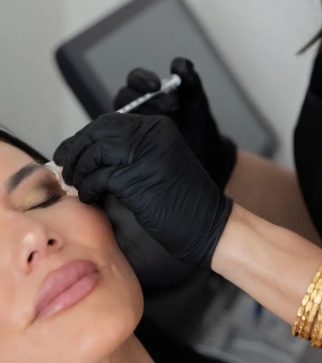
The actual injections are typically quick and are performed with a very fine needle.
Most patients describe the sensation as a brief pinch or sting.
Treatment itself often takes approximately 10 to 15 minutes, depending on the number of areas being treated.
Most patients return to their normal activities afterward.
How Long Does Botox Take to Work?
Botox does not work immediately.
Many patients begin noticing changes within approximately three to five days.
Full results are generally evaluated around 10 to 14 days after treatment.
This is why Khyati may recommend waiting until the two-week mark before deciding whether an adjustment is needed.
Treating too early can lead to unnecessary additional dosing before the initial treatment has fully developed.
How Long Does Botox Last?
For many patients, Botox and similar neuromodulators last approximately three to four months.
Duration varies based on several factors, including:
- treatment area
- dose
- muscle strength
- metabolism
- product used
- treatment history
Some products, including Daxxify, may last longer for certain patients.
Your individual response is more useful than a generic timeline.
What Should You Do After Botox?
Aftercare is generally simple.
Your provider may recommend that you:
- remain upright for several hours after treatment
- avoid rubbing or aggressively massaging the treated area that day
- avoid strenuous exercise, saunas, or hot yoga for approximately 24 hours
- avoid facials, microneedling, or laser treatment directly over the area for a period of time
- follow any individualized instructions provided at your appointment
Small bumps at injection sites usually fade quickly.
Minor bruising can occur.
Always follow the specific aftercare recommendations given by your treating provider.
Is Botox Safe?
Botox and other neuromodulators have been used extensively in both medical and cosmetic treatment.
When appropriately selected, dosed, and administered by a qualified medical provider, they have an established safety profile.
Common temporary side effects may include:
- redness
- tenderness
- small injection-site bumps
- bruising
- headache
Less common effects can include unwanted muscle relaxation, such as brow heaviness or temporary eyelid drooping.
Because the medication temporarily affects muscle activity, precise placement is important.
Neuromodulator treatment is not appropriate for everyone.
Certain medical conditions, medications, pregnancy, breastfeeding, and neuromuscular disorders may affect whether treatment is appropriate.
A complete medical history should always be reviewed before treatment.
What Is Preventative Botox?
Preventative Botox refers to using conservative neuromodulator treatment before expression lines become deeply etched into the skin.
The idea is simple.
Dynamic lines are created by repeated movement. Over years, those lines may eventually remain visible even when the face is relaxed.
Reducing repeated muscle movement may help slow that progression for some patients.
That does not mean everyone in their twenties or thirties automatically needs Botox.
Treatment should be based on anatomy, existing lines, muscle activity, goals, and personal preference rather than age alone.
For younger patients, conservative dosing is often appropriate.
The goal is typically prevention without unnecessarily restricting natural expression.
Botox in Leawood, KS: What Should You Look for in an Injector?
There are many places offering Botox, Dysport, and other injectable treatments throughout Leawood, Overland Park, and the Kansas City area.
The experience can vary considerably.
When choosing a Botox provider, ask:
- Who will actually perform my injections?
- What medical credentials do they have?
- How much experience do they have with facial anatomy?
- Will they assess my facial movement before injecting?
- Do they individualize dosing?
- What happens if I have a question after treatment?
- Is follow-up available?
- Will I see the same provider over time?
At our Leawood practice, injectable treatments are performed by Khyati Kapur, PA-C, who brings more than 25 years of clinical experience across emergency medicine, surgery, wellness, and aesthetic care.
Patients see the same provider over time, which allows Khyati to understand their facial anatomy, previous dosing, response to treatment, and long-term goals.
That continuity matters.
Aesthetic medicine should not feel like an assembly line.
How Much Does Botox Cost in Leawood?
Botox pricing varies based on the product used, the number of units required, the treatment area, muscle strength, and the patient’s goals.
Because Botox and Dysport units are not interchangeable, comparing practices by “price per unit” alone can be misleading.
The more useful question is:
What will it cost to appropriately treat the area I am concerned about?
Neuromodulator treatment is priced by the amount of product used, and the amount you need depends on your anatomy — how strong the treated muscles are, how many areas you are treating, and what result you are after. Two patients treating "the same area" can genuinely require quite different amounts. That is why we quote your treatment at consultation, once we have seen how your face actually moves, rather than publishing a number that would be wrong for most people.
What we will not do is surprise you. You will know exactly what your treatment costs before any product is drawn up, and if your plan changes at a future visit we will tell you before we treat, not after.
A word of caution while you are comparing practices. Different neuromodulators are dosed in different units, and those units are not equivalent — it takes roughly two and a half to three units of Dysport to do the work of one unit of Botox. A low advertised per-unit price is not a discount if you need three times as many units. Ask any practice what it will cost to treat your specific areas, start to finish. That is the only number that lets you compare honestly.
We are a cash-pay concierge practice. What you are paying for is the consultation time, the assessment, the injector, and the follow-up — not just the product.
Ready to Talk About Botox?
If you are considering Botox, Dysport, Daxxify, or another neuromodulator in Leawood, Overland Park, or the Kansas City area, the first step is a conversation about what you actually want to change.
You do not need to know which product you need before your appointment.
That is part of the consultation.
Khyati Kapur, PA-C can evaluate your facial movement, discuss your concerns, explain your options, and recommend a treatment plan designed around your anatomy and goals.
Book a consultation online here
Call or text us: 913-227-9150
Khyati 💜
Frequently Asked Questions About Botox
What does Botox actually do?
Botox temporarily reduces communication between targeted nerves and muscles. This decreases muscle contraction and can soften wrinkles created by repeated facial movement, including forehead lines, crow’s feet, and frown lines.
Is Botox the same as filler?
No. Botox temporarily relaxes muscle activity. Dermal fillers restore or add volume. They treat different concerns, although they may sometimes be used together as part of an aesthetic treatment plan.
How quickly does Botox work?
Many patients begin noticing results within approximately three to five days. Full results are generally evaluated around 10 to 14 days after treatment.
How long does Botox last?
Botox commonly lasts approximately three to four months, although duration varies based on dose, treatment area, muscle strength, metabolism, product, and individual response.
What is the difference between Botox and Dysport?
Both are botulinum toxin type A neuromodulators, but their formulations and dosing differ. Dysport units are not equivalent to Botox units, so comparing price per unit alone can be misleading.
Does Botox hurt?
Most patients describe Botox injections as a quick pinch or sting. Treatment is performed with a very fine needle and typically takes only several minutes.
Can Botox look natural?
Yes. Natural-looking Botox depends heavily on appropriate dosing, placement, facial anatomy, and the injector’s treatment philosophy. The goal does not have to be eliminating all facial movement.
Can Botox prevent wrinkles?
Reducing repeated muscle movement may help slow the development of deeper expression lines in some patients. Preventative treatment should still be individualized rather than based on age alone.
Who should not get Botox?
Botox may not be appropriate for certain patients, including those who are pregnant, breastfeeding, have particular neuromuscular disorders, or take medications that may interact with treatment. A medical evaluation is necessary before treatment.
Where can I get Botox in Leawood, Kansas?
Khyati Kapur, PA-C provides personalized neuromodulator treatment in Leawood, Kansas, serving patients from Leawood, Overland Park, and throughout the Kansas City area.
This article is for educational purposes only and is not a substitute for individualized medical advice. Neuromodulator treatment requires evaluation by a qualified medical provider. Individual results and treatment recommendations vary.